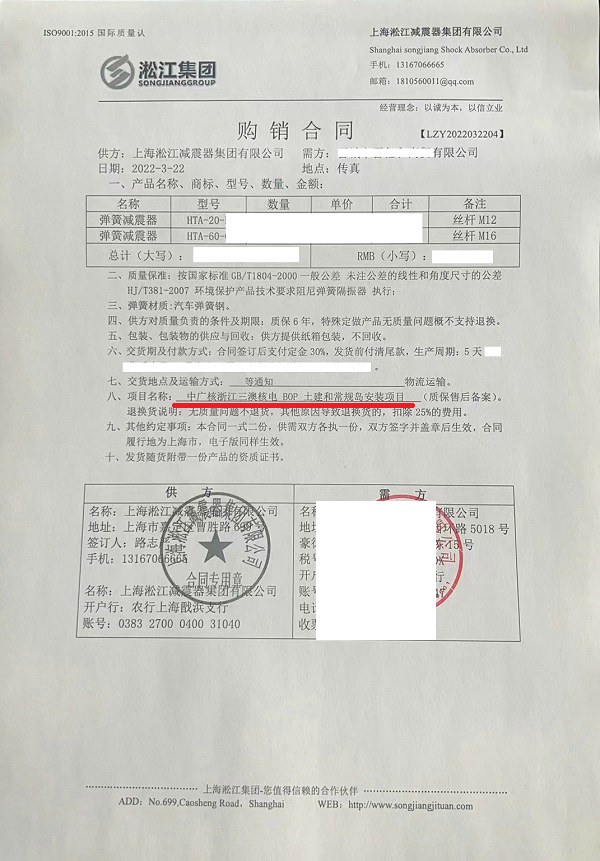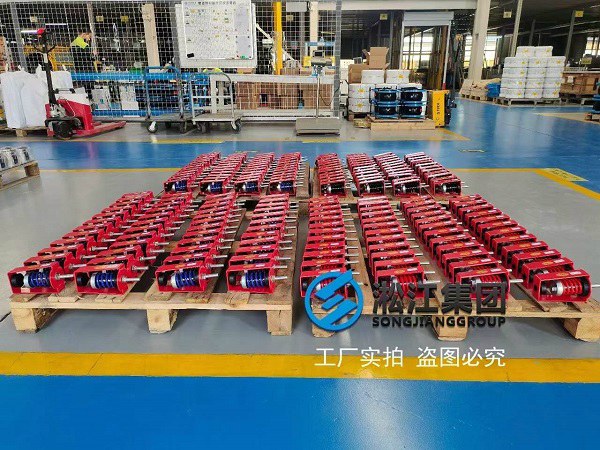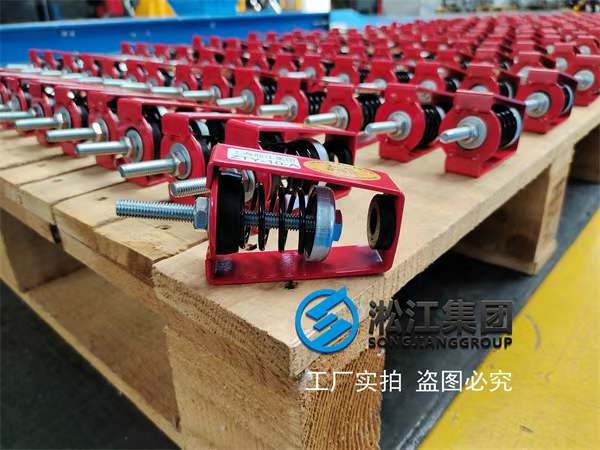

Contract for Spring Isolators for the CGN San’ao Nuclear Power BOP Project
Shanghai Songjiang Vibration Absorber Co.,Ltd.specializes in manufacturing rubber products and spring isolators, with over 30 years of production experience. Our products are of guaranteed quality and have advanced technology. Songjiang Group provides high-quality spring isolators for nuclear power plant projects across the country. Our products feature excellent aesthetics and long warranty periods. Below is the contract information for spring isolators for the CGN Zhejiang San’ao Nuclear Power BOP Civil and Conventional Island Installation Project.

1. CGN Zhejiang San’ao Nuclear Power BOP Civil and Conventional Island Installation Project:
Zhejiang San’ao Nuclear Power Plant marks the first time private capital has participated in investing in a civilian nuclear power project. The first phase involves the construction of two “Hualong One” fusion technology nuclear power units and their supporting facilities, with a total investment of approximately 39.3 billion RMB. The development, construction, and operation of the Zhejiang San’ao Nuclear Power Project are managed by CGN Cangnan Nuclear Power Co., Ltd. On December 31, 2020, the first concrete was poured for the nuclear island of Unit 1 of the Zhejiang San’ao Nuclear Power Project, officially marking the commencement of the first phase of the San’ao Nuclear Power Project.
On September 2, 2020, the State Council Executive Meeting, chaired by Premier Li Keqiang, approved the second phase of the Hainan Changjiang Nuclear Power Project and the first phase of the Zhejiang San’ao Nuclear Power Project. The meeting emphasized that actively and steadily advancing nuclear power projects is a significant measure to expand effective investment, enhance energy support, and reduce greenhouse gas emissions. The meeting approved the projects that were included in the plan, met the conditions, and adopted the “Hualong One” third-generation nuclear power technology, including the second phase of the Hainan Changjiang Nuclear Power Project and the first phase of the Zhejiang San’ao Nuclear Power Project, which marks the first participation of private capital in a nuclear power project. The total effective investment in these two projects exceeds 70 billion RMB.
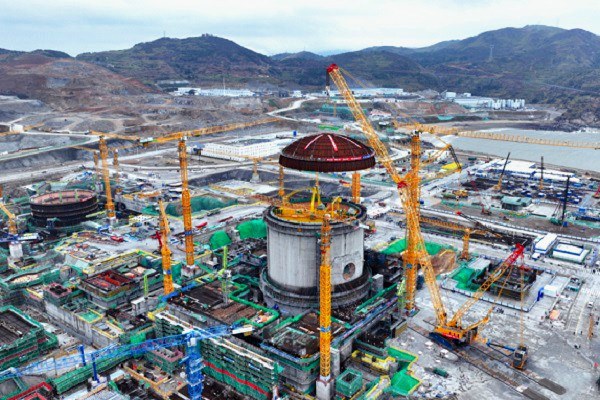
According to the Environmental Impact Assessment approval documents released by the Ministry of Ecology and Environment in April 2020, the project plans to construct two “Hualong One” fusion technology nuclear power units and their supporting facilities, with a total investment of approximately 39.3 billion RMB. The project development, construction, and operation are managed by CGN Cangnan Nuclear Power Co., Ltd., which is responsible for the Zhejiang San’ao Nuclear Power Project. The San’ao Nuclear Power Project is planned to build a total of six units using China’s independently developed third-generation nuclear power technology, “Hualong One.”
Large nuclear power projects have historically been powerful tools for economic growth and air quality improvement. Nuclear power plants are high-tech products with large initial investments and long construction periods. The construction process requires a substantial amount of electromechanical equipment, along with extensive construction, installation, and design technical services. Additionally, these projects can create numerous direct and indirect employment opportunities across society.
On November 3, 2022, the successful installation of the dome on the CGN Zhejiang San’ao Nuclear Power Unit 1 was completed, marking the transition of the unit from the civil construction phase to the equipment installation phase. The project is progressing as planned. As of January 24, 2023, both Hualong One units at the San’ao Nuclear Power Base have completed dome installation nearly two months ahead of schedule, transitioning fully from civil construction to equipment installation.
Once all six units of the San’ao Nuclear Power Project are completed, the annual power generation will reach 52.5 billion kWh. This will result in an annual reduction of 15.88 million tons of standard coal consumption and 43.68 million tons of CO2 emissions, equivalent to afforesting 118,000 hectares. This will provide continuous clean energy for the sustainable development of the Yangtze River Delta region and make a positive contribution to China’s “dual carbon” strategy.