

Shanghai Songjiang Group provides supporting products to Guangzhou Stanray Electrical Chemical Plants, including EPDM acid and alkali resistant flexible rubber bellows. These joints have an integrated inner rubber layer, seamless and smooth, with labels produced through vulcanization, ensuring compatibility with chemical products. They possess high pressure resistance, excellent elasticity, large displacement capacity, balance pipeline deviation, vibration absorption, noise reduction, and easy installation.
The EPDM rubber expansion joints provided by Shanghai Songjiang Group to Guangzhou Stanray Electrical Chemical Plants’ subsidiary adopt EPDM material, boasting superior oxidation, ozone resistance, and corrosion resistance capabilities. EPDM rubber, a terpolymer of ethylene, propylene, and non-conjugated diene, has been commercially produced since 1963, with an annual global consumption of 800,000 tons. With excellent vulcanization characteristics, it stands out in the polyolefin (PA66) family. It has the lowest density among all rubbers and can absorb a large amount of fillers and oils without significantly affecting its properties, resulting in low-cost production.
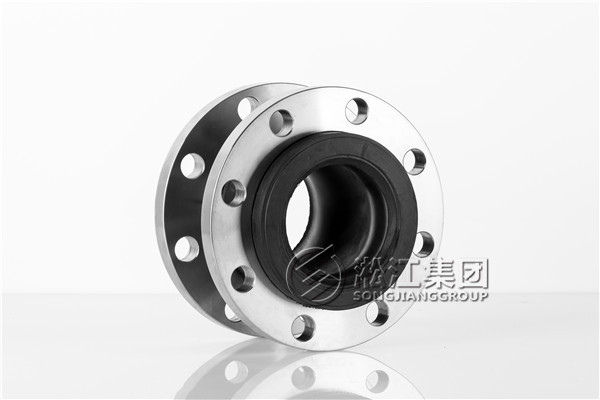
Product Specifications:
- Flange Material: 316L stainless steel flange
- Working Pressure: 16kg
Introduction to Guangzhou Stanray Electrical Chemical Plants:
Guangzhou Stanray Electrical Chemical Plants Limited is jointly invested by Japan’s Stanray Electrical Corporation (60%), Guangzhou Automobile Group Components Co., Ltd. (30%), and Honda R&D (China) Co., Ltd. (10%). Established on September 29, 2002, with a registered capital of 44.7 million US dollars, it is located in the eastern area of the Guangzhou Economic and Technological Development Zone. Its main customers include well-known automobile manufacturers such as GAC Honda, Dongfeng Honda, Dongfeng Nissan, and GAC Mitsubishi.
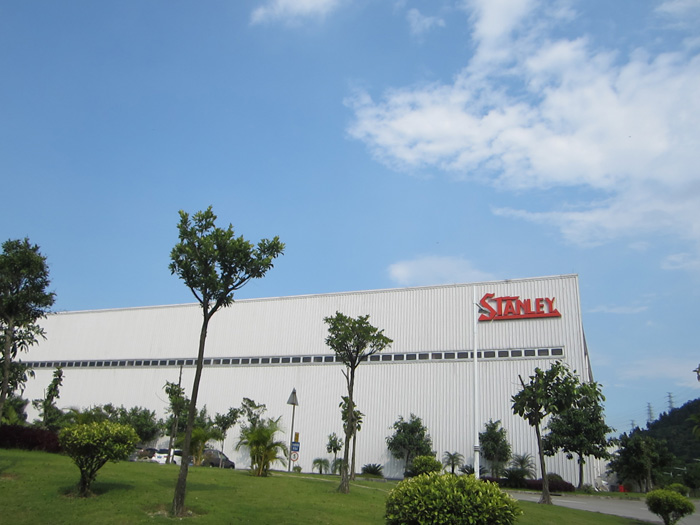
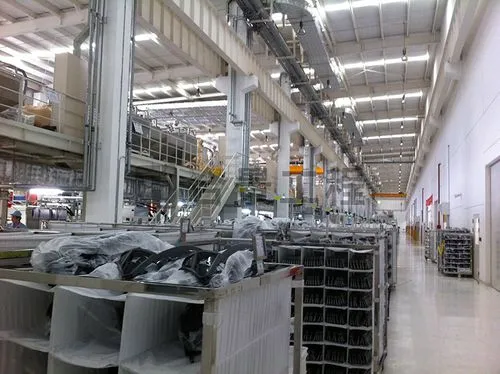
The company is mainly engaged in the design, manufacturing, and sales of automotive lighting products, automotive lighting molds, and injection molds, as well as providing after-sales service. The company completed construction and commenced production on May 21, 2003, with an initial investment production capacity of 240,000 sets of automotive lighting products per year. Currently, the company’s total land area is approximately 100,000 square meters, with four major centers for management, marketing, production, and technology, employing over 1300 people, with an annual output value of approximately 2.4 billion yuan.
EPDM Rubber Expansion Joints’ Role in Chemical Plant Wastewater Pipeline Systems:
EPDM rubber expansion joints produced by Shanghai Songjiang Group play a crucial role in the wastewater pipeline systems of Guangzhou Stanray Electrical Chemical Plants. These systems must handle various properties of wastewater, including mixtures of chemicals, acidic or alkaline wastewater, and high-temperature wastewater. In the daily operation of pipeline systems, EPDM rubber expansion joints provide the following key functions:
- Leak Prevention: EPDM rubber expansion joints play a vital role in preventing leaks in wastewater pipeline systems. For example, in the wastewater pipeline systems of chemical plants, the wastewater often contains corrosive substances. If leaks occur at pipeline connections, it not only causes environmental pollution but also may irreversibly damage the pipeline system, affecting the daily production operations of the plant. The excellent sealing performance of EPDM rubber expansion joints can effectively prevent such occurrences.
- Vibration and Shock Absorption: The flow of wastewater in chemical plant wastewater pipeline systems typically generates vibrations and shocks, and EPDM rubber expansion joints have excellent elasticity, capable of absorbing these vibrations and shocks, thereby protecting the stability and safety of the pipeline system. For instance, when a large volume of wastewater flows through the pipeline system, EPDM rubber expansion joints can reduce the vibrations of the pipeline system, preventing damage due to vibration.
- Adaptation to Temperature Changes: The temperature of wastewater in chemical plant wastewater pipeline systems may change, and EPDM rubber expansion joints have excellent temperature resistance, capable of adapting to changes in wastewater temperature, maintaining the stability and sealing of pipeline connections. For example, when handling high-temperature wastewater, EPDM rubber expansion joints can maintain their elasticity, ensuring the normal operation of the pipeline system.
- Reducing Maintenance Costs: EPDM rubber expansion joints have properties such as corrosion resistance and wear resistance, capable of reducing the maintenance costs of pipeline systems. For example, due to its corrosion resistance, EPDM rubber expansion joints are not easily corroded by chemical substances, thus requiring less frequent replacement, reducing maintenance costs and downtime.
In summary, EPDM rubber expansion joints play multiple functions and make significant contributions to the wastewater pipeline systems of Guangzhou Stanray Electrical Chemical Plants, including preventing leaks, absorbing vibrations and shocks, adapting to temperature changes, and reducing maintenance costs, ensuring the safe and stable operation of the pipeline system.