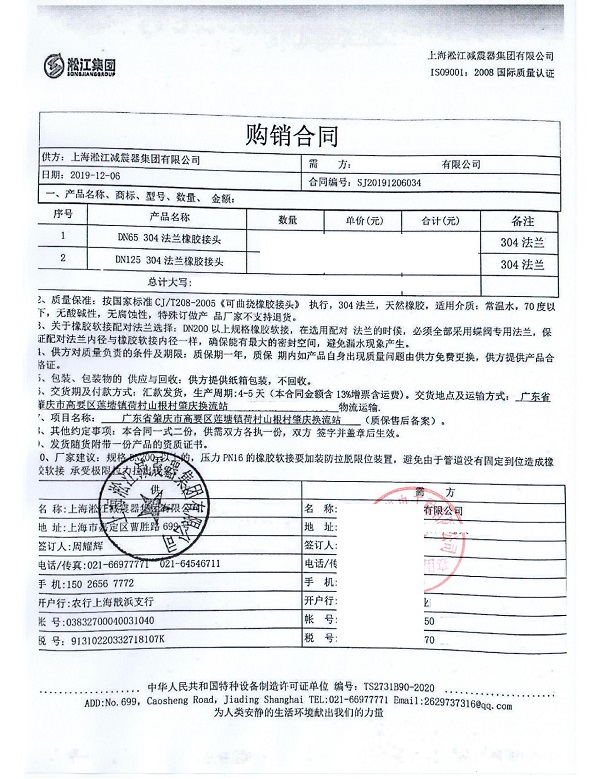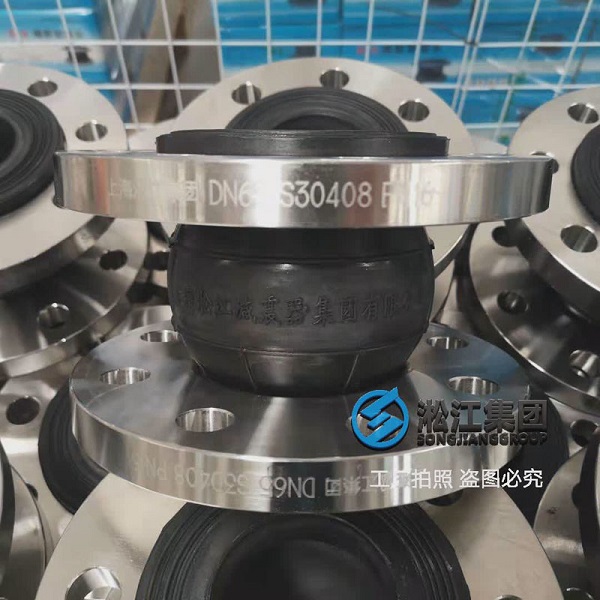

Rubber Expansion Bellow Contract for the Zhaoqing Converter Station Project in Guangdong Province
Shanghai Songjiang Vibration Absorber Co.,Ltd. with over 30 years of experience in rubber expansion joint production, provides high-quality rubber expansion bellow products for numerous provincial and municipal converter station projects. Below is a detailed introduction to the rubber expansion bellow contract information for the Zhaoqing Converter Station Project in Guangdong Province.
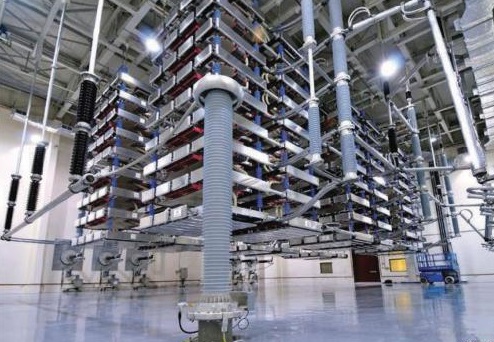
Introduction to the Zhaoqing Converter Station Project in Guangdong Province
The Zhaoqing Converter Station is the receiving-end inverter station of the ±500 kV Gui-Guang I DC transmission system. Since its commissioning, the Zhaoqing Converter Station has operated stably, consistently maintaining high-load power transmission levels. As of December 2017, it had cumulatively transmitted 175.82 billion kWh of electricity.
Overview of Converter Stations
A converter station in a high-voltage direct current (HVDC) transmission system is established to convert AC (alternating current) to DC (direct current) or vice versa. The purpose of this conversion is to meet the power system’s safety, stability, and power quality requirements.
Key Equipment and Facilities in a Converter Station
A converter station typically includes the following major equipment and facilities:
Converter Valves: Used for converting AC to DC or DC to AC.
Converter Transformers: Essential for the voltage transformation and electrical isolation in the conversion process.
Smoothing Reactors: Used to reduce the ripple in the DC current.
AC Switchgear: Includes circuit breakers, isolators, and other components for the AC system.
AC Filters and Reactive Power Compensation Devices:** To ensure power quality and system stability.
DC Switchgear: Similar to AC switchgear but used in the DC part of the system.
DC Filters: To remove harmonics from the DC power.
Control and Protection Systems: To manage, regulate, and protect the converter station.
Ground Electrodes: For the proper grounding of the system.
Remote Communication Systems:To ensure reliable operation and coordination with other parts of the power grid.
Core Equipment of a Converter Station
The core components of a converter station are the converter transformers and converter valves. Converter valves have evolved from early mercury arc valves to modern thyristor valves. Since the late 1950s, the rapid development of thyristor technology has increased the capacity of individual components, improved reliability, reduced costs, and eliminated arc-back failures. Thyristor valves also offer easier maintenance and require less space. By the 1970s, thyristor valves had largely replaced mercury arc valves.
Control, Regulation, and Protection Systems
The control, regulation, and protection systems of a converter station perform the following functions:
Control and Dispatch of DC Power: Manage the start and stop of DC power flow, control the direction and magnitude of power flow, and handle other electrical parameters.
Fault Handling and Protection:Address and limit the impact of abnormal operation of converter valves and disturbances in the AC and DC systems, protecting the converter station’s equipment.
Monitoring:Monitor various parameters of the converter station to ensure proper operation.
The performance and reliability of the control, regulation, and protection systems are crucial for the safe and reliable operation of the converter station and the entire HVDC transmission system. The trend in the development of these systems is towards the use of microcomputer technology, enhancing intelligence and automation.