

Shanghai Songjiang Group’s official website introduces information regarding rubber expansion joints for sugar production wastewater evaporators. The Songjiang Group provides high-quality rubber expansion joints for numerous sugar mills’ syrup wastewater evaporators, with food-grade rubber testing certificates.
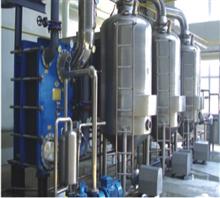
Separators and plate heat exchangers are employed for moderate to low evaporation volumes, particularly suitable for liquids containing minor insoluble solids or those less prone to scaling. Their unique structure, featuring distinct product and heating channels formed by specialized product and steam plates, enables efficient heat exchange. The heating plates, situated between fixed and movable plates, are secured with fastening screws on the side, while adhesive-free embedded gaskets ensure sealing between the heating plates. These gaskets can be easily inserted or removed without the need for specialized tools. The compact design and short connecting pipelines facilitate easy and space-efficient installation, with a maximum height of only 3-4 meters. Additionally, the system can be heated using either steam or hot water, ensuring operational versatility. Furthermore, the single-pass operation ensures gentle and uniform evaporation, maintaining high product quality. These systems are highly adaptable in terms of processing capacity, as the number of plates can be adjusted as needed. They are also easy to maintain and clean due to the straightforward opening of the plate assembly.
Syrup, a viscous solution with high sugar concentrations, is typically produced through boiling or other techniques using materials such as sugar water, sugarcane juice, fruit juice, or other plant extracts. With its high sugar content, syrup can be stored for extended periods without refrigeration when sealed. Syrup finds versatile applications in beverage mixing and dessert making.
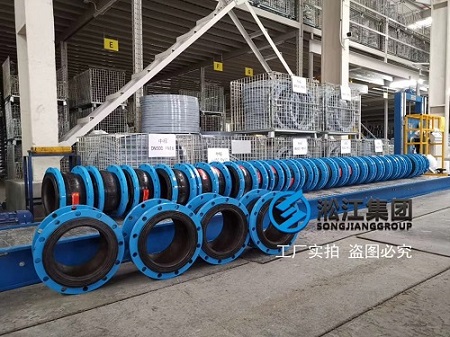
Below is the picture of songjiang rubber expansion joints for Sugar production Wastewater Evaporators.
Process Overview
It is divided into three methods: acid method, enzyme method, and acid-enzyme method.
Different processes have different sweetness, viscosity, thickening properties, moisture retention, hygroscopicity, osmotic pressure, color stability, caramelization, reducibility, and fermentability. Regardless of the method, it is a complex hydrolysis process. There are three main reactions in the starch hydrolysis process: hydrolysis into glucose; recombination into complex sugars such as isomaltose after hydrolysis into glucose; and decomposition of glucose into 5-hydroxymethylfurfural and acetic acid color substances.
Acid Method Hydrolysis:
Hydrolysis is performed using hydrochloric acid or oxalic acid, which can quickly and efficiently hydrolyze starch into glucose.
Hydrochloric acid has high hydrolysis capacity but lacks specificity, which may lead to by-product formation and darker color, requiring subsequent purification steps.
Oxalic acid hydrolysis is relatively mild, resulting in lighter-colored syrup and reducing the amount of purification steps and purification agents used.
Enzyme Method Hydrolysis:
Enzyme method hydrolysis exhibits high specificity, typically using amylase to catalyze the hydrolysis of starch, resulting in high product purity and light-colored syrup.
Due to the specificity of enzymes, there are fewer by-products, reducing the need for subsequent purification steps and purification agents, thus lowering production costs.
Enzyme method hydrolysis can be carried out at room temperature and pressure, with a relatively simple process suitable for scenarios requiring product quality retention and production efficiency improvement.
Acid-Enzyme Method Hydrolysis:
The acid-enzyme method combines the advantages of the acid and enzyme methods by partially hydrolyzing under acidic conditions and then further hydrolyzing by adding enzymes.
This method can utilize the rapid and efficient hydrolysis of the acid method and the high specificity and low by-product formation of the enzyme method.
The acid-enzyme method can partially overcome the drawbacks of acid method hydrolysis, such as darker color and more by-products.


![[Dalian Bay Liutun Old Area Renovation Project] Transformer Isolator Contract](http://123.57.174.78/wp-content/themes/songjiang/timthumb.php?src=http://123.57.174.78/wp-content/uploads/2024/05/Dalian-Bay-Liutun-Old-Area-Renovation-Project-Transformer-Isolator-Contract-1.jpg&h=300&w=400&zc=1)